QA/TPI Surveillance Services
It is critical that all of the products be manufactured, inspected, and tested in accordance to API and the manufacturer and/or customer requirements to minimize in-service problems and/or failures.
Our Services
Third-Party Inspection (TPI)
Mill & Threading Surveillance
Mill Auditing & Qualifications
Rigsite Running Evaluations & Recommendations
QA Management & Coordination
The Viking QA Team provides experienced and competent QA & TPI Inspectors around the globe.
We provide mill, post mill and vendor surveillance on critical casing and/or tubing strings, drill pipe, line pipe, downhole engineered equipment and accessory items.
QA/TPI Surveillance
The Viking QA Team offers the following QA/TPI Surveillance services:
Onsite QA Surveillance
Provide onsite witnessing of inspections and/or quality processes to ensure compliance to industry standards and/or client specifications.
Project Quality Management
Project Quality Coordination
Administrative Staff
Auditing – ISO 9001 or API Q1: 2015
Qualification / Vendor Audits / Assessment
Customer Audits / Assessment
Internal Audits
Specializing in OCTG audits
Quality Engineering
Provide in-house quality consulting services for operators and/or assist in developing and implementing QCP’s, SOP’s and specifications.
QA/QC Plans
Inspection Test Plans
Failure Investigation
Expediting
Material Logistics and Inventory Control
Rig Site OCTG Running & Installation Evaluations
Technical Writing
Specifications
Procedures
Guidelines
Third Party Inspection
Mill Surveillance
Post Mill Inspection
Threading
Vendor Surveillance
ASNT Level III Consulting/Training
Provide NDT consulting and training to clients. Consisting of writing, reviewing and approving NDT procedures.
Specialized QA Services
The Viking QA Team provides experienced and competent QA & TPI Inspectors around the globe, providing mill, post mill and vendor surveillance on critical casing and/or tubing strings, drill pipe, line pipe, downhole engineered equipment and accessory items. These include, but are not limited to, the following:
Subsurface / Surface Wellbore Equipment
Wellhead & Christmas Trees
Production Tubing String
Flow Nipples, Collars & Pup Joints
Chemical Injection and Pressure/Temperature Mandrels
Gas Lift Mandrels
Packers
Isolation Valves
Perforating Equipment
SCSSV’s
Screen & Blank Assemblies
Rental/Running Tool Equipment – Subsea Tools, Brushes, Scrapers, etc.
Oil Country Tubular Goods (OCTG’S)
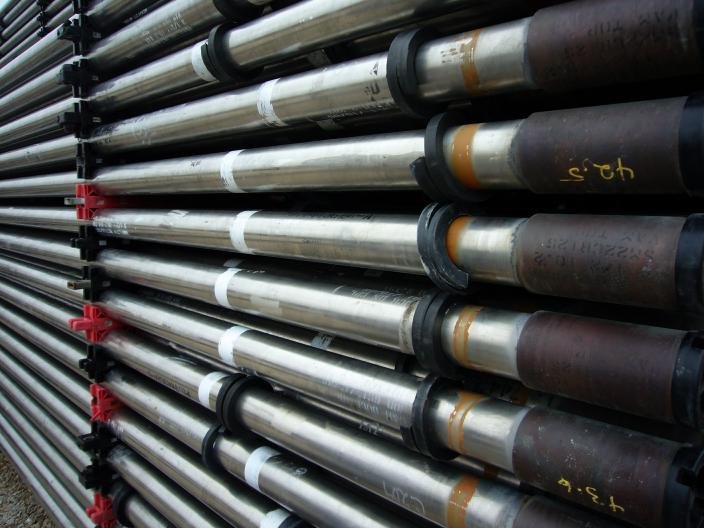
Casing, Tubing, Couplings, Pup Joints, Accessories
Drill Pipe / Drill Collars
Pipe, Tool Joints, Collars
Line Pipe
Transmission Lines, Gathering Lines
Accessories
X-Overs, Hangers
Our Inspection Process
It is critical that all of the products listed above be manufactured, inspected, and tested in accordance to API and the manufacturer and/or customer requirements to minimize in-service problems and/or failures.
Listed below are a few areas of specific services we recommend and provide associated with products listed above during the manufacturing, inspection, threading and testing of these components. Depending on the product and service condition in which it will be utilized, will determine the specific recommendations, including, but not limited to:
Establishment of a Quality Plan & Inspection Test Plans
This plan should denote the critical products, sequence of manufacturing, inspection and testing operation, listing of procedures governing the operation, and defined surveillance levels by the customer.
Witness QQ Set-Out, Hardness Testing, Component Verification, Assembly, Drift, Functional & Hydrostatic/Gas Pressure Testing, Where Applicable
Viking’s QA personnel will review the traceability on components prior to assembly, verify MTR’s and their compliance, and witness the functional testing of the final component(s) and/or assembly. Viking will ensure that all testing meets API, industry standards and/or manufacturers’ requirements. Hardness testing and test results will be monitored and verified on NACE identified component(s).
Monitor / Witness NDE & Mechanical Testing on Products
Viking’s QA Team will monitor and/or verify that the supplier performs the appropriate NDE inspection as required and that the inspection is conducted in accordance to the manufacturers’ and/or inspection companies’ procedure. Mechanical testing and test results will be monitored/witnessed for compliance to stated requirements.
Verify Compliance of Material Test Reports
Viking’s QA Team will review the MTR’s on products to ensure they meet API, Industry standards and the manufacturers’ requirements.
Verification Of Critical Dimensions on Critical Products / Components
Viking’s QA Team will monitor the gaging and/or review the critical dimensions on products/components specifying critical tolerances and/or require specific “fit-up”.
Witness Re-Gage by Thread Manufacture of All Premium Connections, Where Applicable Witness Torque-Turn/Time Make-Ups of All Premium Connections Associated With All Accessory Items & Couplings Review & Approve Final Documentation Package
This should include MTR’s, Dimensional, NDE, Testing reports, Shipping list, Torque/Turn charts, Thread certifications, etc.
Consult Our Specialist

Operations Manager | Quality Assurance
Nick is a quality professional who has been in the quality arena for more than 14 years. He currently holds certifications as an AWS Certified Welding Inspector and ASQ Certified Quality Inspector. Additionally, previously held his NACE CIP Level 1 and NDE Level II MT, PT, and UT Level 1.
Related Resources
So your pipe burst, your pump shaft snapped, or your welded joint split, and you need to figure out why and how to fix it. The next steps you take can make the difference between finding answers and leaving the mystery unsolved until the next failure.
We have many options for conducting root cause analyses (RCA) including TapRooT™ and CAST/STPA. The method described here is the method developed by GATE to simplify the analysis while maintaining adequate rigor.
This paper is Part II of a two-part series intended to narrate the history, some of which has been forgotten over time, leading up to the publication of the first Material Requirement (MR-01-75) standard prepared by NACE and its subsequent auxiliary standards.
This is Part I of a two-part series intended to narrate the “lost” history leading up to the publication of the first Material Requirement (MR-01-75) standard prepared by NACE (now AMPP) and its subsequent auxiliary standards.
The recent global over supply of crude oil and soft demand has resulted in oil companies shutting wells in to prevent destroying value and to protect their balance sheets. The time frame, until production startup becomes economic, is uncertain and therefore, it is imperative that appropriate actions are taken to maintain and manage the integrity of shut-in wells and associated delivery systems.
Circuitization aims to reduce overhead inspection costs through the thoughtful break down of a system into smaller sections.
This information provides insight to aid in preventing common failures and improving industry practices to reduce incident rates in addition to saving time and money.
The building blocks of a robust inspection program are condition monitoring locations (CMLs). As defined by API 510 and API 570, CMLs are designated locations on pressure vessels or piping systems where periodic external examinations are conducted to assess condition.
This article will outline the challenges during integrity management, and the best practices that ultimately deliver a coordinated, effective, and cost-optimized IM plan.
Oil well stimulation is commonly undertaken using aqueous solutions of hydrochloric acid (HCl), hydrofluoric acid (HF), organic acids or mixture. The use of these acids will open new channels near the wellbore region for the oil and gas flow through and will result in increased production.
In this GATEKEEPER, the philosophy around the materials selection and corrosion monitoring is discussed as the primary design barrier to corrosion and cracking in critical parts of a subsea system.
The following material properties are important when understanding the limitations of API 5CT high strength steels: yield strength (YS), Charpy V-notch (CVN) impact energy, hardness and tempering.
The mechanisms that can lead to catastrophic failures of equipment in the oil and gas industry due to the presence of mercury are briefly presented in this GATEKEEPER.
This GATEKEEPER provides a general overview of the epoxy coatings used in offshore oil and gas service and discusses common causes of premature coating failure as well as factors affect coating quality.
Casing and tubing that are subjected to combined loads have higher collapse strength than previous formulas would predict, permitting the use of thinner walled, or lower strength, pipe than formerly required.
Efficient access to multiple permeable natural gas zones located in deep, over pressured, and extremely corrosive environments presents a challenge for South Texas operating companies.
The flow of metal during Friction Stir Welding is clarified using a faying surface tracer and a nib frozen in place during welding. It is shown that material is transported by two processes.
This work is a discussion of how the limit performance is being defined and quality systems are being revised for API connections in accordance with the objectives of the LRFD method for OCTG.
New integral joint connections can withstand greater loads, increasing their range of applications. The use of IJC casing can allow a slimmer well to be drilled, reducing total well costs.
A wide range of aluminum alloys and other metals and alloys, particularly dissimilar materials, have been friction-stir welded in this study.
Friction Stir Welding is a relatively new technique for welding that uses cylindrical pin or nib inserted along the weld seam.
Acidizing involves pumping acid into a wellbore or geologic formation that is capable of producing oil and/or gas. The purpose of acidizing is to improve a well’s productivity or injectivity after production has declined 4.
Annulus Pressure Management refers to an engineered approach ensuring that casing annulus pressures do not challenge the well’s integrity during the life of the well.
In order to avoid potential riser failures or replacement campaigns for anticipated service lives that may extend to 30 years or more, process facility components such as risers and flowline systems must now be subjected to more enhanced integrity monitoring through the whole of their service life.
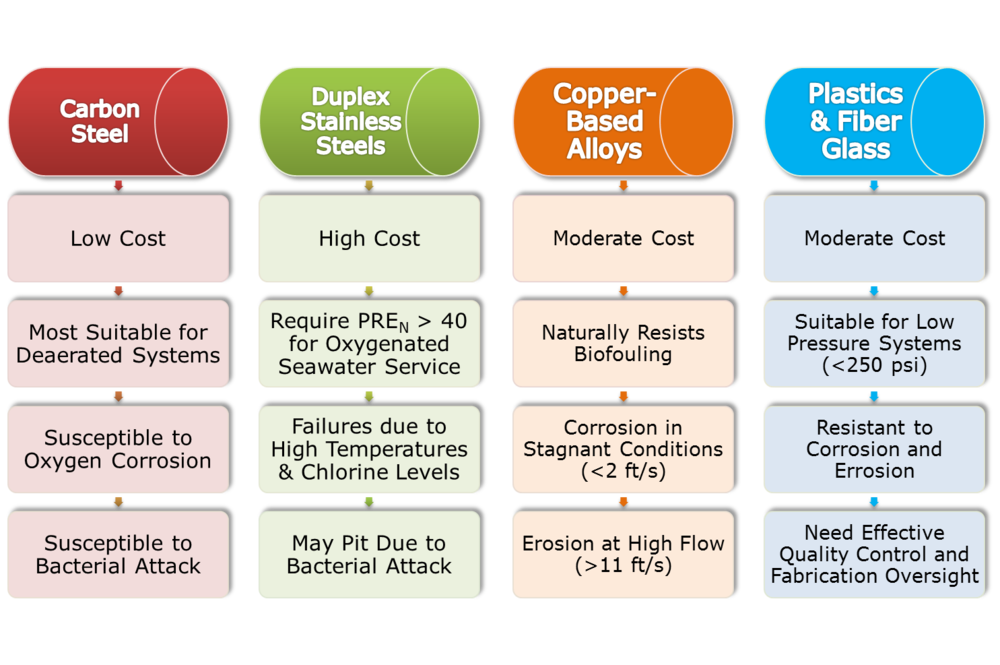
Material selection is a nuanced process. A primary assessment based on environmental and operating conditions enables identification of outright inappropriate materials and allows a general selection to be made.
Determination of the proper 13Cr grade for sour service involves the investigation of domain diagrams, and often requires further fitness-for-service testing.
Corrosion in field conditions can be extremely slow, thus accelerated test methods have been designed to enable evaluation and prediction of long-term corrosion behavior. In general, corrosion testing is conducted by exposing small samples of a material to the desired environment for a relatively short period of time, then evaluating the type and severity of corrosion in order to select materials or chemicals that will maximize the life of the part in question.
As TOL corrosion occurs in wet gas lines operated in stratified flow, the corrosion inhibitor or other corrosion protection chemicals such as mono-ethylene glycol (MEG) injected into the system remain at the bottom of the line and are not able to protect the top of the line.
The difficulty in selecting the materials of construction for the topsides portion of seawater injection systems is associated with uncertainty around the reliability and performance of their associated oxygen removal systems.
Related Project Experience
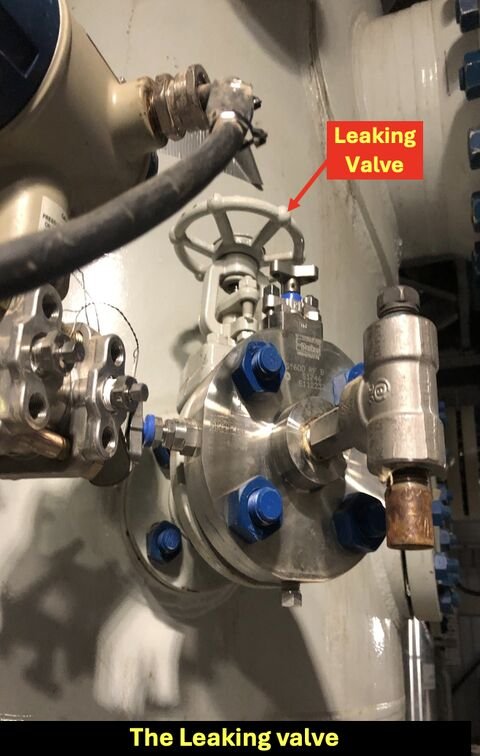
A client sent us a leaking gate valve with a through-wall crack that had developed after years in service.
The investigation showed the valve had failed by fatigue. The crack had been growing for some time before finally penetrating through the valve wall and creating a leak.
Complete Field Integrity Project including wells, gathering lines, and facilities. Corrosion and Chemical Optimization and Development of a Viking Proprietary Tool for integrity.
HPHT Well Design Support
Quality Assurance, Failure Analysis Work, Well Delivery Processes, Well Design
HPHT Well Design Support
Unconventional Plays, Horizontal Wells, Failure Analysis Work, Quality Assurance Work, Rig Operations
Unconventional Plays, Quality Assurance, Rig Operations, Mill Surveillance
Unconventional Plays, Horizontal Wells, Failure Analysis Work, Quality Assurance Work, Rig Operations
Well Engineering HPHT
Material Selection for acid gas injection wells in west Texas. Materials Selection included production tubing, production casing, packer, production liner, Xtree and wellhead equipment.
CRA materials selection for production Liner for packer-less well designs in West Texas CO2 floods
Materials Selection for new well completion to include casing, and tubing. Corrosion Models were developed for these type wells using state-of-art software and modeling techniques
An independent oil operator experienced four back-to-back casing failures in his Oklahoma shale program. These current failures and setbacks were eating into his budget and eroding stakeholder faith in the ability to complete wells.
His initial comment was, “I’m not getting any sleep – I need some help. You’ve got to help me stop the leaks!”
A winter-peaking natural gas storage plant undergoes a production expansion which includes infill well drilling and a gas compression system expansion.
Led study for independent oil and gas operator regarding the injection of flue gases from Gulf coast power plants to a Deepwater development for the purposes of enhanced oil recovery (EOR). This considered pretreatment and processing requirements for flue gases from natural gas-fired boiler plants, natural gas combined cycle plants, coal-fired boiler plants and integrated gasification combined cycle plants. Key issues considered were the ability of the pretreatment system to remove oxygen and water.
GATE was responsible for developing the overall Aseng Water Injection System Basis of Design.
GATE was requested to determine the potential risks involved in waterflood for the Neptune and Shenzi fields as a means to determine whether waterflood was a viable option for enhanced oil recovery. Based on this, GATE developed a waterflood philosophy document that details the problems and possible mitigation procedures for BHP’s use in determining whether or not to waterflood.
GATE provided in-house production chemistry support for the Horn Mountain, Atlantis and Thunder Horse assets.
GATE undertook a chemical vendor qualification process on behalf of Noble to procure the best suited chemical and chemical support for both the Aseng and Alen assets based on their fluids, and system along with their specific operational needs.
GATE leverages each chemical vendors based on performance of chemical, lab, ability to meet supply demands and upsets, price, experience and key criteria important to contractor and operator.
GATE undertook a rigorous qualification process on behalf of the client to BHP to procure the best suited chemicals and chemical support for both the Neptune and Shenzi assets based on their fluids, and system along with their specific operational needs.
BP Pipeline oversees the operation of 9 total oil and gas export systems from more than 20 different platforms in the GoM. The pipeline systems transport almost half-million barrels of oil and hundreds of MMSCF of gas daily from the producing platforms to onshore processing facilities.
The FAMP has been developed for BP Pipeline assets to ensure proper working of the high volume systems by organizing and delegating between operators, facilities, laboratories and onshore offices. By facilitating the review of system performance and operation, this information provides the basis of a continuous improvement approach.
As part of the scope of work, GATE was commissioned to develop two comprehensive, user-friendly screening tools to guide subsea flowline materials selection decisions for wet gas and waterflood during concept selection and design using field specific data.
GATE undertook an investigation into recovered, decommissioned equipment to determine both the cause of failure and investigate integrity of components that may not have failed. This information has proven invaluable to operators who can base the performance of other equipment of a similar type and construction in a similar environment. This was significant as the recovered materials ranged from the mud-line, to sea surface and topsides.
GATE provides Shell with cathodic protection design support for all their subsea projects. This includes coating selection (anti-corrosion and flow assurance) and qualification, which also involves interfacing with the coating yard. An important aspect of this operation is carrying out comprehensive quality audits of anode foundries and coating plants around the world.
GATE determined the risks and mitigation of risk associated with wet parking and flooding of a gas export pipeline with unfiltered seawater. The key concerns are corrosion due to microbes, oxygen corrosion, and drying to prevent hydrate formation when the pipe goes into service.
GATE undertook erosion and corrosion modeling in the flowline to develop sand production allowance and an erosion corrosion risk assessment. From this, a maximum rate of gas production that will allow the asset to maintain it design life was determined. This enabled the operator to safely increase production by 25% to without additional risk to the asset thereby increasing the Net Present Value of the asset.
GATE was responsible for formulating a detailed flow assurance strategy for the successful operation of Juniper production system. The project involved extensive cross-functional interaction, detailed study of the lessons learnt from similar fields in the region (offshore Trinidad), simulating a wide variety of what-if scenarios (both steady state and transient) to draft the flow assurance strategy and operability logic for optimized production.