Blockage Remediation Services
Viking and BlueFin provides small to turnkey blockage remediation services.
Our Services
Engineering Services
Procurement & On-site Execution
Post Remediation Services
Small to Turnkey Blockage Remediation Services with a Systems Engineering approach.
At Viking, we successfully implement our systems engineering approach to break the traditional silos by forming a project team which consists of in-house subject matter experts, intervention specialists, project managers, and reputable equipment and technology companies through strategic partnerships. This in turn allows us to provide a scalable or turnkey and fit-for-purpose solution.
Engineering Services
System Assessment & Diagnostic Review
This step involves early assessment to understand events leading to the blockage which eventually helps in choosing the right path for the blockage remediation. The objective of the step is to narrow down the list of possible blockage compositions and locations.
Blockage Identification & Confirmation
Pipelines can be partially or fully blocked depending on the nature of the blockage and its cause. While it may not be possible to fully understand the nature of the blockage when it happens, it is possible to examine the characteristics of the produced fluids and the injected fluids and come up with a list of probable blockage constituents.
Blockage Location Assessment
Following identification of the nature of the blockage, it is critical to estimate blockage location either through conventional practices or advanced monitoring techniques. The preferred method shall consider field specific information and must not aggravate/interfere with potential future blockage remediation options. We have strategic partnerships with key technology leaders enabling us to use cutting edge tools for blockage location, if required.
Blockage Remediation Strategy Selection
At this stage, a list of suitable blockage remediation options available in the industry is prepared and the options are ranked based on the level of feasibility for a given operating system, the cost and time involved in remediation, personnel and environmental safety and risk to return ratio. The best possible remediation strategy is selected based on the consensus between the management, the project team and the operations team.
Our Proprietary Blockage Remediation Equipment & Technology
The EelReel tool is an extended reach solution to clean plugged flowlines and pipelines.
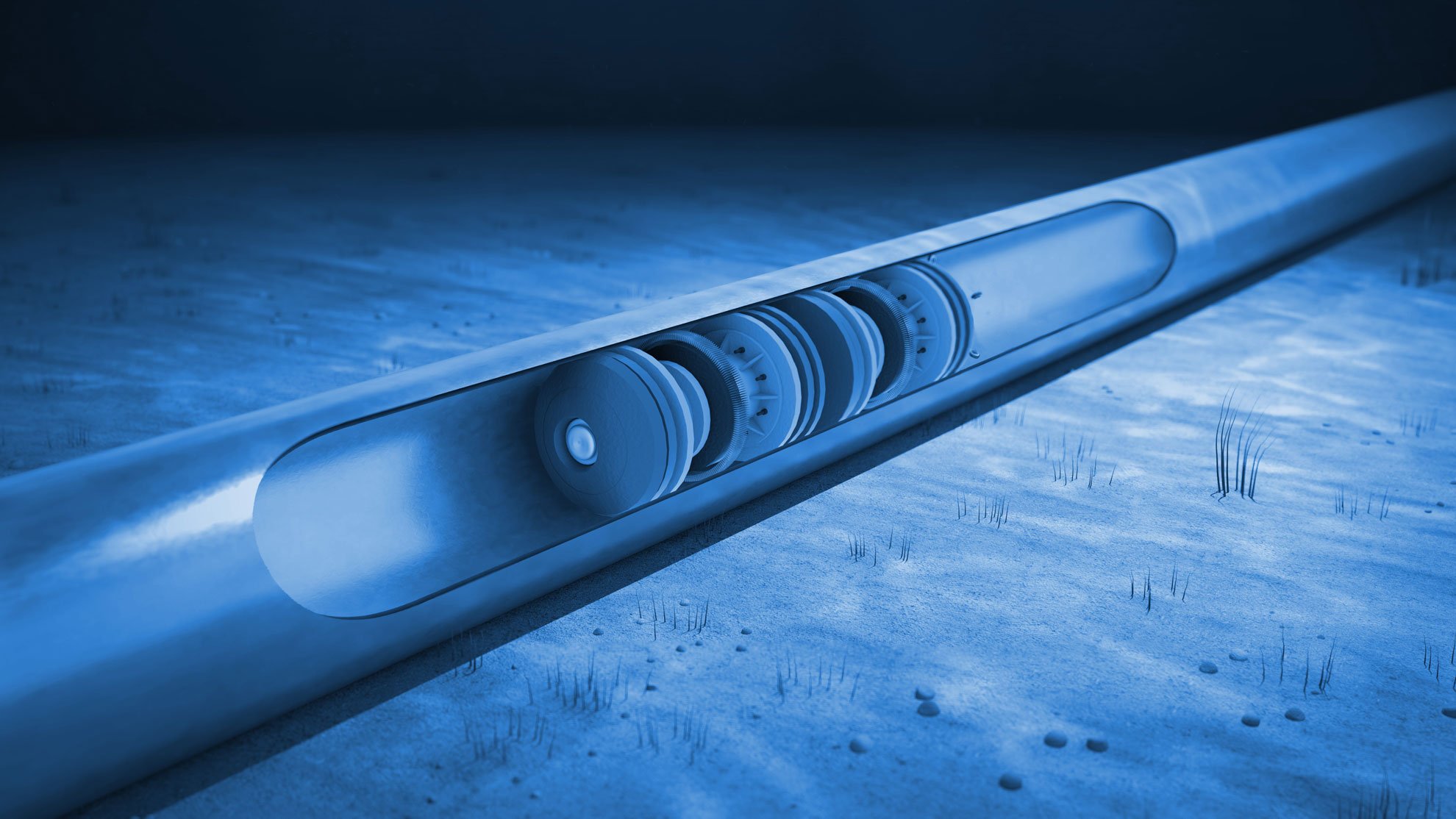
ElastiPig is a highly malleable, elastomer-solid pig that exerts minimal outwards pressure when transitioning flowlines. It creates 100% surface area contact with the pipe wall, providing excellent sealing capabilities. ElastiPigs are useful when used alone or in combination with mechanical pigs, pipeline gels and/or chemicals.
LiquiGel® pigs are reliable and superior alternatives for pipeline and process operators. Our “unstickable” pig gel technology demonstrates safe performance when measured against pipeline integrity concerns, or where multi-diameter, barriers to entry and exit, and multi-stage pigging challenges exists.
The BlueDog, utilizes a controlled jetting technique, allowing blasting action to penetrate the entire circumference of the internal pipe wall. This eliminates the bulldozing effect that often results in sticking of mechanical pigs.
With the Prho™ engine, we configure tools for our clients that are customizable, benchmarked, accurate, easy to use and produce fast results.
GATE developed an integrable comprehensive flow assurance surveillance tool that, with one simulation run, allows the operator to
Procurement & On-site Execution
GATE is able to provide a complete turnkey solution including procurement of equipment and service vessels for remediation efforts. Our engineering staff will be able to oversee efforts onsite with the ability to optimize the solutions in field.
Canyon Offshore, Inc Partnership
GATE Energy and Canyon Offshore, Inc. work together to jointly offer subsea blockage prevention, detection and remediation solutions to the offshore oil and gas industry. This alliance offers effective and integrated blockage solutions using GATE Energy’s flow assurance engineering and patented technical solutions, combined with Canyon Offshore’s world class vessel and ROV assets.
To learn more at Canyon Offshore, Inc visit www.helixesg.com
Post Remediation Services
Based on project requirements, the post remediation service may include facilitating production restart, monitoring post remediation system performance, or preparing the line for decommissioning and abandonment. Our service offer extends beyond the blockage remediation exercise and can be customized to ensure client expectations are met or exceeded.
Consult Our Specialist

Engineering Manager | Production & Reservoir
Nelson is a Chemical and Petroleum Engineer with more than 20 years of experience. Nelson started his career as a Field Operations Engineer in Colombia and later moved to the USA working with ScandPower Petroleum Technology (now part of Schlumberger), GATE, and currently Viking Engineering. His experience includes onshore and offshore projects worldwide.
Phone: 281.870.8455
Related Resources
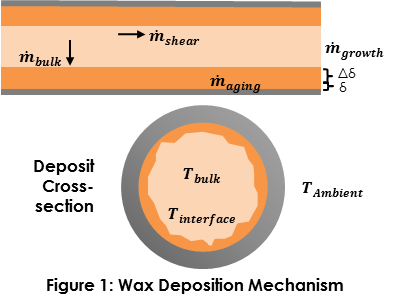
The objective of this GATEKEEPER is to provide a high-level overview of the model commonly used in the industry to estimate the wax deposition.
The design and development of a viable, robust wax management strategy relies upon the economical evaluation of available management techniques.
Wax management strategies developed during Front End Engineering Design (FEED) can mitigate or perhaps even prevent these costs. The goal of this GATEKEEPER series is to provide high-level insight into the planning, execution, and maintenance of wax management strategies.
One of the primary flow assurance challenges in the production of hydrocarbons is the prevention of pipeline blockages.
This GATEKEEPER discusses the various bacteria testing options that are available, which can be used to validate MPN results, as well as the mitigation and remediation techniques that can be used to decrease the probability or severity of MIC to pipeline infrastructure.
Proper sizing of the flowlines and risers coupled with optimal choking and gas-lift will greatly reduce the risk of slugging and help in efficient management of slugs throughout the life of the field.
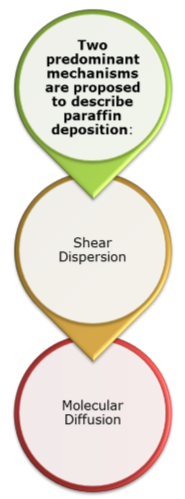
Paraffin precipitation and deposition in flowlines and pipelines is an issue impacting the development of deepwater subsea hydrocarbon reservoirs.
In this paper, the most commonly used In-Line Inspection (ILI) techniques, methodology and limitations applicable to detecting metal loss and wall thickness measurements are presented.
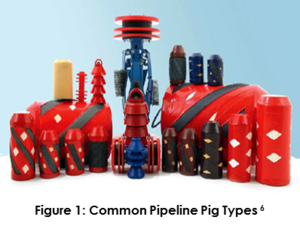
This paper is the first part of a two part series and presents an overview of pig selection criteria for cleaning and maintenance of the pipelines, and covers high level guidance on establishing a progressive pigging strategy.
Asphaltenes are large, complex organic components present in the oil phase, along with resins, aromatic hydrocarbons, and alkanes (saturated hydrocarbons). Resins play an important role in stabilizing asphaltenes in crude oil. When the resins get destabilized, (under unfavorable pressure-temperature conditions) asphaltenes can agglomerate and deposit.
In subsea oil production systems, hydrate mitigation methods during steady state operation are almost always based around heat conservation.
Related Project Experience
Complete Field Integrity Project including wells, gathering lines, and facilities. Corrosion and Chemical Optimization and Development of a Viking Proprietary Tool for integrity.
GATE was requested to determine the potential risks involved in waterflood for the Neptune and Shenzi fields as a means to determine whether waterflood was a viable option for enhanced oil recovery. Based on this, GATE developed a waterflood philosophy document that details the problems and possible mitigation procedures for BHP’s use in determining whether or not to waterflood.
GATE provided in-house production chemistry support for the Horn Mountain, Atlantis and Thunder Horse assets.
GATE undertook a chemical vendor qualification process on behalf of Noble to procure the best suited chemical and chemical support for both the Aseng and Alen assets based on their fluids, and system along with their specific operational needs.
GATE leverages each chemical vendors based on performance of chemical, lab, ability to meet supply demands and upsets, price, experience and key criteria important to contractor and operator.
GATE undertook a rigorous qualification process on behalf of the client to BHP to procure the best suited chemicals and chemical support for both the Neptune and Shenzi assets based on their fluids, and system along with their specific operational needs.
BP Pipeline oversees the operation of 9 total oil and gas export systems from more than 20 different platforms in the GoM. The pipeline systems transport almost half-million barrels of oil and hundreds of MMSCF of gas daily from the producing platforms to onshore processing facilities.
The FAMP has been developed for BP Pipeline assets to ensure proper working of the high volume systems by organizing and delegating between operators, facilities, laboratories and onshore offices. By facilitating the review of system performance and operation, this information provides the basis of a continuous improvement approach.
GATE was responsible for formulating a detailed flow assurance strategy for the successful operation of Juniper production system. The project involved extensive cross-functional interaction, detailed study of the lessons learnt from similar fields in the region (offshore Trinidad), simulating a wide variety of what-if scenarios (both steady state and transient) to draft the flow assurance strategy and operability logic for optimized production.
GATE was involved in formulating the strategy for hot oil circulation and pigging operations for Chissonga. The hot oil circulation study involved optimization of the hot oil injection pressures and temperatures required to displace the cold dead leg in the pigging loop following an extended shutdown. The pigging study involved optimizing the pigging frequency, topsides injection pressures and pig velocities taking into account the production function for the entire life of the field.
The project involved detailed steady state and transient modeling and analysis of gas and oil production systems. Strategies were developed for pigging based on the liquid dropout pattern and fluid velocities.
Phase envelopes of the individual gas streams and gas-mixtures were studies in detail using the software PVTSIM and optimum operating pressures and temperatures were suggested to minimize the liquid drop out.
GATE was responsible for the flow assurance modeling to support Detailed Engineering, Final Commissioning and Startup and Operations Readiness for the Aseng Development. This included steady-state and transient modeling of the production, gas injection, and water injection systems.
GATE was approached by Tullow to provide a detailed view of the several options available in the industry for remediation of hydrate plugs in oil and gas lines, merits and demerits of each strategy and their applicability to the Jubilee field. The project also involves developing detailed procedures for hydrate remediation/removal for Jubilee considering the available topsides and subsea infrastructure.
GATE was involved in performing studies on the gas export line at different flowrates and platform pressures using the transient analysis software OLGA®. This includes calculation of the gas compressor requirements considering the characteristic curves and limitation on the compressor power) was calculated for a fixed export pipe ID.
After an in-line inspection of a pipeline in West Africa, a client discovered significant wall loss in the first three miles of the line. The tool also returned significant wax deposits, casting doubt on the current wax management efforts in place.
The wells producing to the pipeline historically produced H2S; however, the worst offenders were shut-in quickly after it was discovered that they were producing extremely high concentrations of the sour gas.
Developed standalone tool for operator to proactively monitor flow assurance risks based on the field specific reservoir fluids, subsea infrastructure and current operating conditions.
A client operating domestically and internationally needed expert technical support for materials and corrosion control. Their senior management came to Viking for a proposal to provide a variety of consultancy services to cover the following essential needs: materials selection, failure analysis, corrosion monitoring, technical assurance for procurement, and risk assessment.
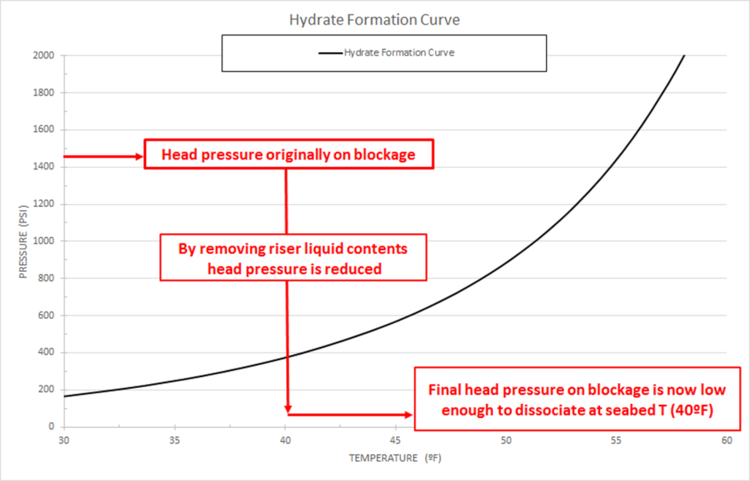
A Gulf of Mexico (GoM) operator in the process of decommissioning one of its fields requested the engineering assessment of a blockage existing in their flowline-riser. The reservoir fluid characteristics and the field’s operational history were extensively reviewed. The review indicated hydrates to be the likely cause of the blockage.
A West Africa field operator witnessed an abnormal increase in pressure topsides when the flowline circulation pump was used to pump dead oil into the production line. No increase in subsea pressure was observed. Operational history prior to blockage hinted at the possibility of the presence of one or both wax and hydrate blockages in the production line. Depressurization options were limited by the blocked gas lift line.
This series of two articles discusses the diagnosis, detection and remediation of oil and gas production system blockages in detail. The current issue focuses on blockage characterization and detection.